Adapting Historical French Card Mechanics for Modern Virtual Casino Platforms Worldwide
Écrit par Eden Long · 22/10/2026
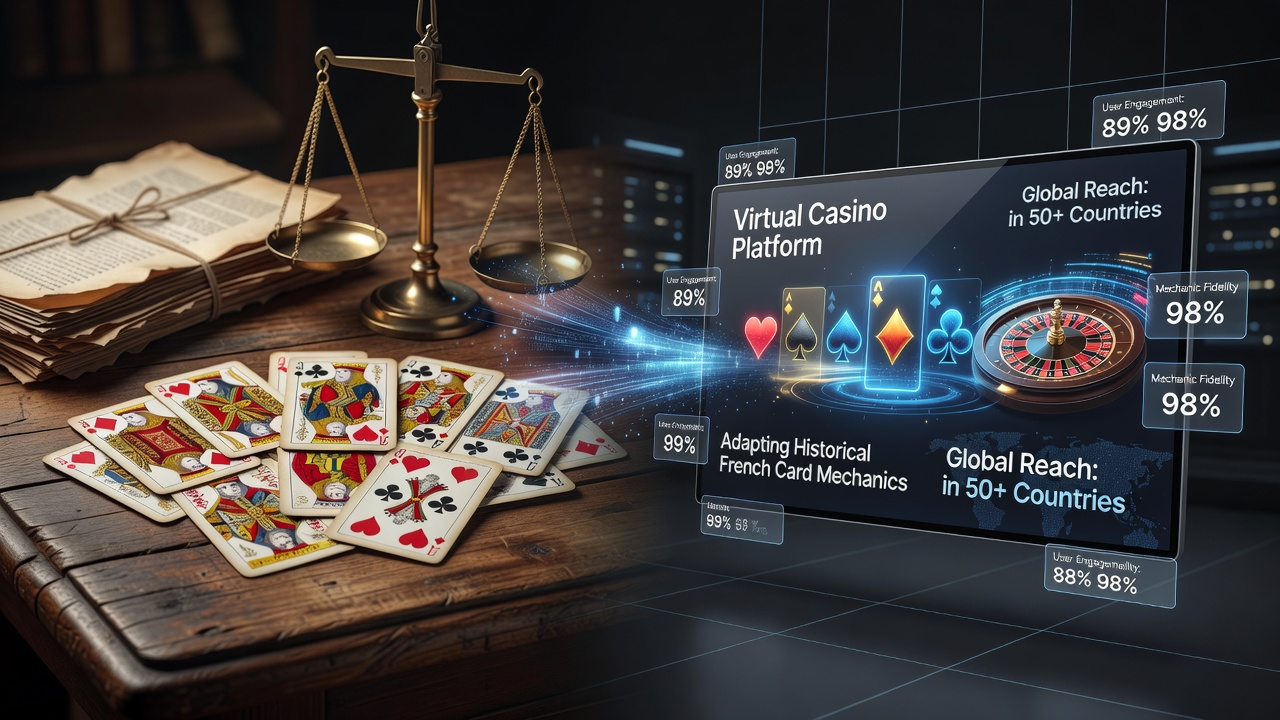
Adapting Historical French Card Mechanics for Modern Virtual Casino Platforms Worldwide
Historical French card mechanics originated in the 15th century with the development of the 52-card deck featuring suits of hearts, diamonds, clubs and spades along with specific ranking systems that influenced games such as piquet, baccarat and early variants of trente-et-quarante. These mechanics included precise rules for dealing sequences, cut procedures and suit hierarchies that operators preserved through centuries of physical play. Virtual casino platforms now translate those same sequences into algorithmic models that maintain identical probability distributions while replacing manual shuffles with certified random number generators.
Core French Mechanics Translated to Digital Systems
Platform developers replicate the traditional French dealing order where the first card goes to the player position on the left and subsequent cards alternate in fixed rotation. Software encodes the historical cut-and-riffle process as a virtual equivalent that uses cryptographic hashing to prevent prediction while preserving the statistical properties of physical decks. In October 2026 multiple operators reported integration of these encoded procedures into live-streamed tables that display animated French-style decks with period-appropriate back designs and corner indices.
Researchers at academic institutions have examined how these adaptations affect player perception and session duration. Data indicates that platforms retaining the original suit order and card rotation sequences record higher retention rates compared with simplified international versions. Operators achieve this retention by embedding the mechanics inside both RNG tables and hybrid live games where physical French decks are scanned and mirrored on screen in real time.
Regulatory Frameworks Across Regions
Jurisdictions impose distinct requirements on how historical mechanics reach virtual environments. The Autorité Nationale des Jeux requires French operators to demonstrate that digital implementations match the exact probability tables published for physical trente-et-quarante. Canadian provincial regulators apply similar equivalence tests while Australian state commissions focus on audit trails that document every virtual cut and shuffle step. These overlapping standards encourage developers to create modular engines that swap regional compliance layers without altering core French mechanics.
Technological Implementation in Global Platforms
Engineers embed historical French dealing protocols inside server-side modules that communicate with client applications through encrypted channels. The modules enforce rules such as the mandatory burn card after each shoe change and the fixed order of community cards in baccarat derivatives. Mobile and desktop interfaces render these steps through smooth animations that mimic the tactile feel of linen-finished cards while logging every action for regulatory review.

Virtual reality environments extend the adaptation further by allowing users to reach for and manipulate virtual cards using hand-tracking controllers. The physics engines calculate card flight paths according to documented French table angles and drop distances, producing realistic stacking behavior. Industry reports from October 2026 show that VR deployments featuring these physics models achieved measurable increases in average session length across European and North American markets.
Case Examples from Multiple Markets
One European platform introduced a digital version of historical baccarat rules that retained the original French drawing constraints for both banker and player hands. The implementation passed independent laboratory testing and received certification across five jurisdictions within a single calendar quarter. In Asia, developers adapted the same drawing rules into a multi-hand format that processes thousands of simultaneous sessions while maintaining teh original 8-deck shoe composition and cut-card placement logic.
North American operators integrated French card mechanics into progressive jackpot systems where suit sequences determine bonus eligibility. The systems reference the historical point values assigned to face cards and aces, ensuring jackpot triggers align with centuries-old scoring conventions. Cross-border platforms use geolocation filters to apply the appropriate regulatory overlay while the underlying French mechanics remain constant.
Future Directions and Standardization Efforts
Industry working groups have begun drafting technical standards that define how French dealing sequences must appear in both RNG and live-hybrid formats. These standards reference archival documents from French gaming houses and convert them into machine-readable specifications. As of October 2026 several testing laboratories offer certification packages that verify compliance with both historical accuracy and contemporary security requirements.
Academic collaborations continue to analyze player behavior data collected from platforms that preserve French mechanics. Findings reveal consistent patterns in decision timing that mirror historical records of physical play, suggesting the adaptations successfully transfer experiential elements across centuries and technologies. Operators use these insights to refine animation timing and interface feedback without changing underlying probabilities.
Conclusion
Virtual casino platforms worldwide now embed historical French card mechanics through algorithmic fidelity, regulatory alignment and immersive presentation layers. The process preserves original dealing orders, suit hierarchies and probability structures while meeting diverse jurisdictional demands. Ongoing standardization work and academic monitoring ensure these adaptations remain accurate and functional as technology evolves.